
What Happens During an RCD Test? A Guide for Sydney Businesses
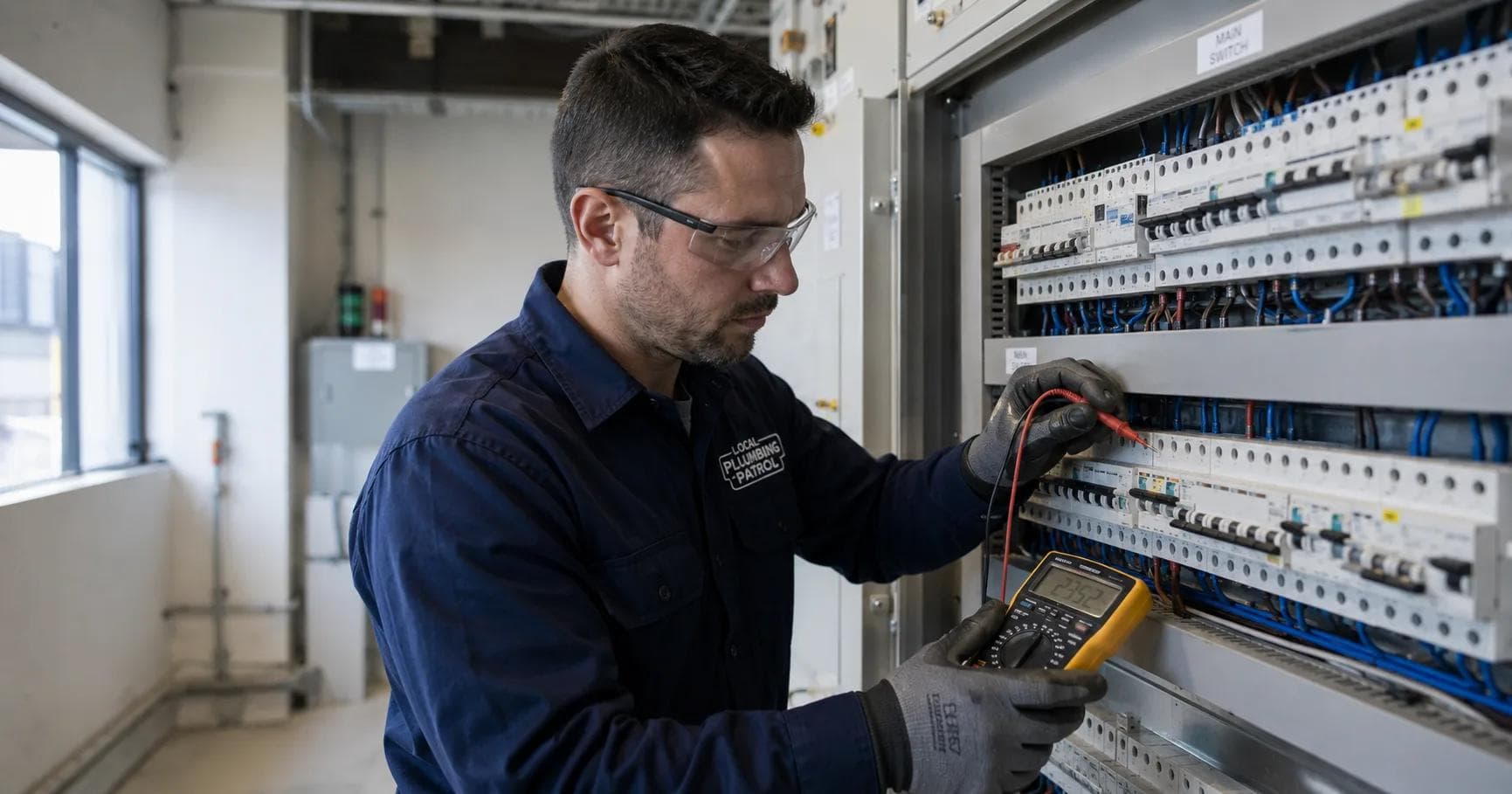
A residual current device, or safety switch, is the last line of defence between a person and an electric shock. It compares the current flowing out through the active conductor with the current returning through the neutral, and when those stop matching because current is leaking to earth through a faulty appliance, a damaged cable, or a person, it cuts the circuit in a fraction of a second. RCD testing in Sydney is how commercial properties confirm those devices still work.
The catch is that an RCD is a mechanical device sitting in a switchboard for years at a time. Dust, corrosion and simple lack of use can slow its internals or seize them altogether. A safety switch that has never been tested is one nobody can vouch for.
What Is RCD Testing and How Does It Work?
RCD testing verifies that a safety switch trips, and that it trips fast enough to matter.
RCDs are not circuit breakers. A circuit breaker protects wiring from overload and short circuit. An RCD protects people, detecting leakage to earth at levels far below what a breaker responds to. Commercial switchboards need both; one does not substitute for the other.
Testing involves two distinct checks:
- Push-button test. Pressing the test button simulates a fault and should trip the RCD immediately. It proves the mechanism physically moves, and site staff can do it between formal inspections without special equipment.
- Operating time (trip time) test. A calibrated instrument injects a controlled fault current and measures how many milliseconds the RCD takes to disconnect. It proves the device trips fast enough to prevent injury, and needs a competent person to carry out.
The second test is the one that matters, and the one businesses most often skip. A safety switch can pass the push-button test and still fail on trip time. Under AS/NZS 3760, a Type I RCD (10 mA) must trip within 40 milliseconds and a Type II (30 mA) within 300 milliseconds. Only a calibrated instrument can measure that.
Why Annual RCD Testing Matters for Commercial Properties in Sydney
Protecting people. Offices, warehouses and retail floors run equipment that gets moved, knocked and plugged into extension leads daily. A working RCD stands between a damaged cable and a serious injury. SafeWork NSW reports more than 1,000 electrical incidents and close to 600 injuries since 2020, including three worker deaths.
Preventing damage and downtime. Earth leakage often signals a developing fault, degraded insulation, moisture in a fitting, an appliance on its way out. Testing finds those while they are still cheap to fix.
Business continuity. An unplanned failure in a commercial kitchen, a data room or a retail store costs far more in lost trading than a scheduled inspection.
Australian Standards and NSW Compliance Requirements
Two standards apply. AS/NZS 3000, the Wiring Rules, governs how electrical installations are designed and installed, including where RCD protection is required. AS/NZS 3760 covers in-service inspection and testing, and sets out the test methods, maximum trip times and retest intervals for RCDs.
Testing intervals under AS/NZS 3760 depend on the environment. A low-risk office is treated differently from a workshop, commercial kitchen or construction site, and portable RCDs are tested more often than fixed ones — which is why the interval should be set against your actual site conditions rather than assumed.
On the regulatory side, SafeWork NSW states that a person with management of a workplace must ensure RCDs used at work are tested regularly by a competent person, and that a record of testing, other than push-button testing, must be kept until the device is next tested or disposed of.
Record-keeping is where businesses most often fall short. The test happening isn't enough; being able to evidence it is the compliance position. Every inspection The Sheriff completes is documented with results, dates and the detail an audit trail requires.
Which Commercial Properties Should Schedule Annual RCD Testing?
Any workplace where people plug things in: offices and co-working spaces, warehouses and distribution centres, retail stores, schools and childcare centres, medical and aged care facilities, hotels and hospitality venues, manufacturing and light industrial sites, and strata buildings with shared common-area boards.
Higher-risk environments, commercial kitchens, wet areas, workshops, sites with heavy portable equipment, generally warrant shorter intervals than a standard office fit-out.
Common Electrical Issues Found During RCD Testing
- Safety switches that fail the trip time test despite passing the push button, the most common finding, and invisible without instrument testing
- RCDs that don't trip at all, usually seized after years without operating
- Circuits with no RCD protection where the Wiring Rules would now require it, common in older fit-outs or after undocumented alterations
- Unlabelled or incorrect wiring, where the board diagram no longer matches the installation
- Ageing switchboards with loose terminations or heat damage
- Nuisance tripping traced to a genuine leakage fault rather than a faulty switch
Benefits of Preventive Electrical Maintenance
Scheduled testing turns electrical safety from a reactive cost into a predictable one. Faults are found while they're minor. Repairs get planned around trading hours instead of forced into an emergency call-out. Compliance documentation stays current rather than being assembled under pressure during an audit. And where an incident does occur, a documented maintenance history supports your position with insurers and regulators, the absence of records is what causes problems.
Why Choose Professional RCD Testing Instead of DIY Checks?
Pressing the test button is worth doing between inspections, but it isn't RCD testing. It confirms the mechanism moves. It can't tell you whether the device trips inside 40 or 300 milliseconds.
Proper testing needs a calibrated instrument, a competent person to interpret the results, and a report that stands up to scrutiny. The Sheriff's licensed electricians carry out trip time testing, identify the cause where a device fails, and document what was tested and what it returned.
Why Sydney Businesses Work With The Sheriff
The Sheriff provides electrical and GPO safety testing for commercial properties across Sydney, with licensed electricians, calibrated equipment and clear compliance reporting. Testing is scheduled around your operating hours, and where a fault is found you get a plain explanation of what it is and what fixing it involves, not a list of unexplained failures.
Book Your Annual Safety Check
RCD testing is a small, predictable piece of work that protects your people, your equipment and your compliance position. The devices are already installed, testing confirms they'll do their job when it counts.
Protect your employees, customers and business with professional RCD testing. Contact The Sheriff to schedule your annual electrical safety inspection and keep your commercial property compliant, safe and operating with confidence.
Ready to Protect Your Property Investment?
Get the clarity and confidence you need with Sydney's trusted inspection experts.

License Number: 483083C
Qualified NSW Builder (General Building Work) - Licensed to carry out residential building work in NSW